
Rewarding Firefighters Breeds Arsonists
The quote "Rewarding Firefighters Breeds Arsonists" comes from Aditya Sobti, Ph.D. a consultant at Oliver Wight. When I first heard it I immediately attached to the sentiment.
I have been the firefighter. I am good at it, and for a long time I enjoyed the rewards that came with it. That is the uncomfortable truth I need to put on the table before anything else — because this article is not a detached observation about organisational dysfunction. It is written by someone who has lived on the wrong side of the argument and knows exactly why it feels right.
The late arrival. The tense room. The problem that has everyone stumped. You walk in, read the situation quickly, and fix it. The relief is visible. Your name is on everyone's lips. That moment is genuinely addictive, and if your organisation rewards it — with visibility, with reputation, with promotion — people will find ways to keep experiencing it.
That is where the arsonist comes in.
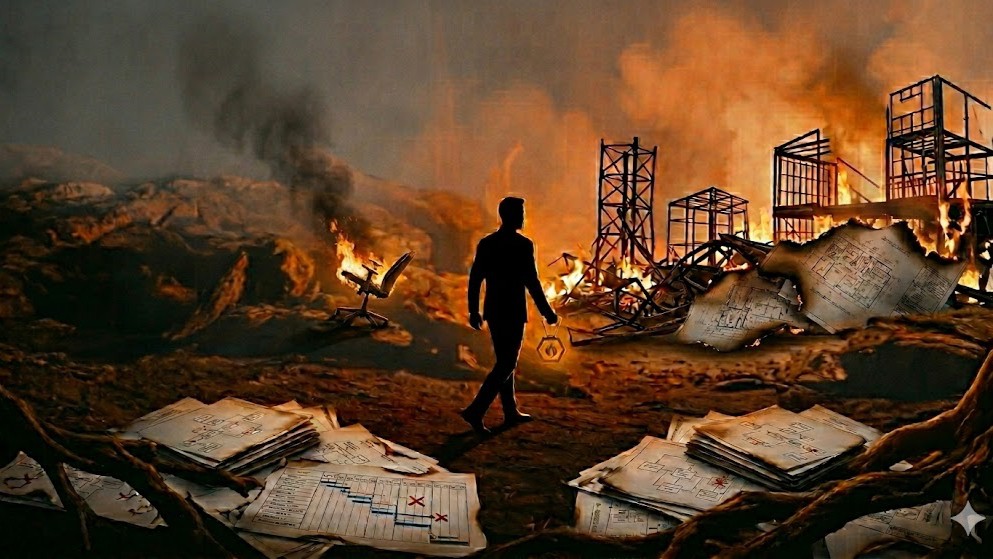
Most organisations do not explicitly reward firefighting. Nobody writes "creates emergencies to resolve them" into a performance framework. But the incentive structure does it anyway, because the reward is visibility — and visibility flows to drama, not prevention.
The person who designs a process resilient enough that nothing ever breaks is invisible. The person who flies in and gets it working again is a hero. Both outcomes are identical from the organisation's perspective. Only one of them generates the story that gets retold at the next all-hands.
People have short memories for the detail of what happened. The reason fades. The name stays. The firefighter becomes the go-to person — the one whose name surfaces first when the next crisis lands, whose reputation compounds on visibility alone, independent of whether the crisis should have happened at all.
The post-incident analysis that should ask "why did this happen and how do we prevent it?" gets quietly overtaken by the relief of resolution. The root cause report sits in a folder. The firefighter moves on to the next fire.
The firefighter is not the problem. The measurement system is.
When an organisation consistently elevates the people who respond to crises over the people who prevent them, it is not making a values statement — it is making an incentive statement. And people respond to incentives with predictable accuracy.
Prevention is structurally hard to reward because it produces an absence. The system that never fails, the risk that never materialised, the crisis that was designed out before it could start — none of these generate the visible moment that performance conversations are built around. The firefighter's contribution is vivid and timestamped. The prevention architect's contribution is invisible by definition.
Until organisations find a way to make prevention visible — to count the fires that did not happen, to name and reward the people who ensured they didn't — they will keep producing the behaviour the measurement system incentivises. Not because people are cynical, but because people are rational.
Here is the harder truth: the organisation that consistently rewards firefighting does not just recognise heroes. It manufactures arsonists.
The mechanism is straightforward. If the crisis moment is reliably where career capital is earned, then ensuring there is a crisis moment becomes a rational — if rarely conscious — career strategy. The fire that needs putting out does not always start by accident. Sometimes it starts because the person best positioned to extinguish it was also best positioned to let it grow a little before stepping in.
This does not require bad intent. It requires nothing more than a reward system that has trained people, through consistent and repeated reinforcement, that visible rescue outperforms invisible prevention. The arsonist is not imported from outside the organisation. They are produced by it — shaped gradually by the precise incentives the organisation chose to put in place.
The organisations that break this cycle do something structurally different. They make the invisible visible.
That means treating post-incident analysis as a serious organisational output, not a formality to complete before moving on. It means asking not just who fixed it, but who flagged it, who designed the safeguard that limited the damage, who raised the risk before it became a crisis. It means building recognition around resilience, not just recovery.
The tactical skills the firefighter has developed are genuinely valuable — the ability to read a situation quickly, act under pressure, and make decisions with incomplete information matters. The question is whether the organisation is deploying those skills to recover from problems, or to prevent them. That distinction is entirely within the organisation's control to shape.
The firefighter who keeps showing up to the same building is not a hero. They are a symptom.
What does your organisation actually reward — and what does that tell you about the fires you should expect next?
Original post: https://www.linkedin.com/pulse/rewarding-firefighters-breeds-arsonists-michael-senn-pnsjc/?trackingId=5Z1nlvTfSYK4Isg8sFsDWw%3D%3D